Opens the print dialog — choose “Save as PDF” as the destination.

SafeDrop Newsletter · Issue #1 · August 2026
Multimodal Photonic-Electronic Sensor Platform for Rapid Health and Environmental Diagnostics · A Horizon Europe project
Project kick-off · Potsdam-Golm, Germany

From a dog’s nose to a multimodal chip: SafeDrop is under way

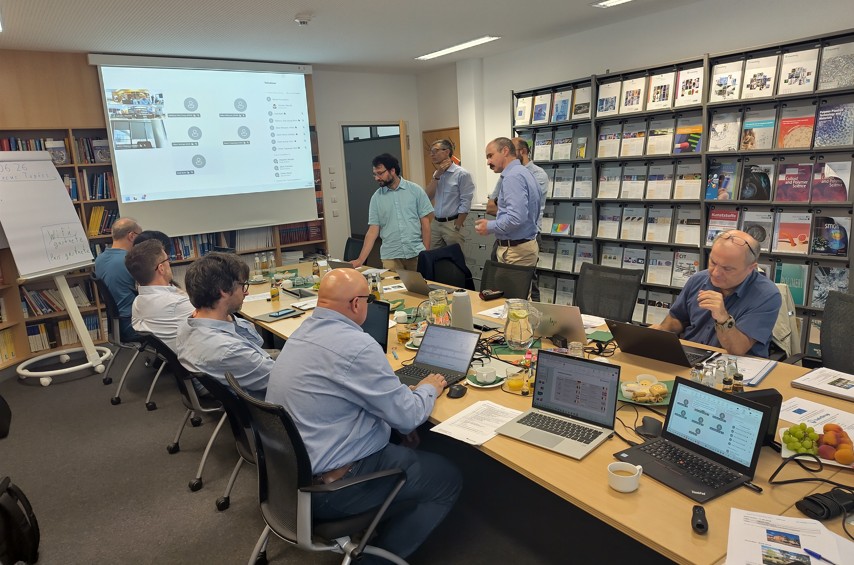
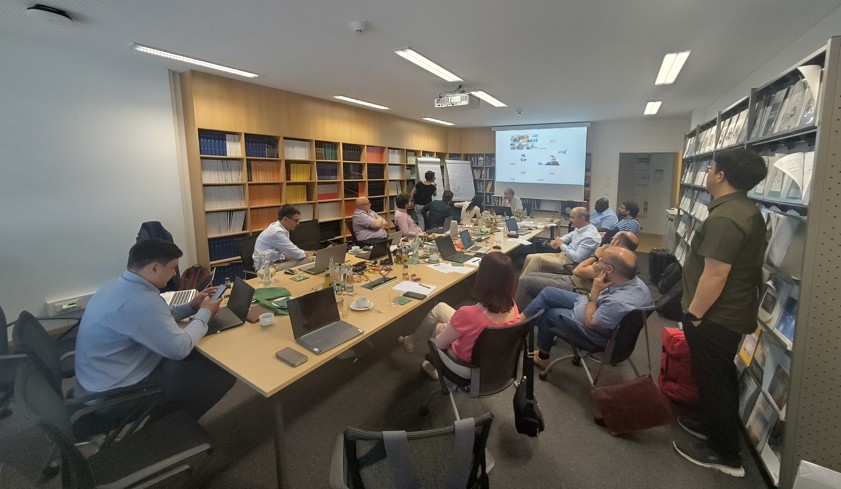
On 18–19 June 2026, the full SafeDrop consortium met at the Fraunhofer Institute for Applied Polymer Research IAP to launch our 48-month Horizon Europe project. Ten partners from seven countries are now working together to build a bio-inspired “digital dog nose”: a sensor platform that gives lab-quality chemical results on site, in minutes instead of days.
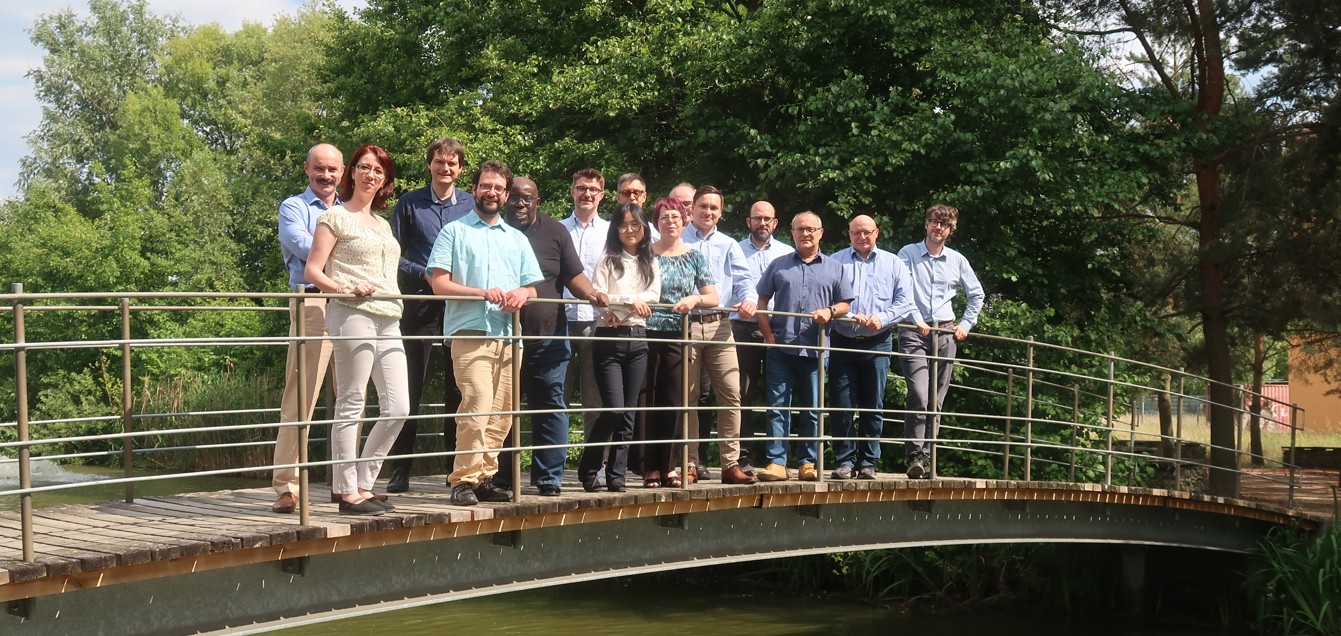
SafeDrop consortium kick-off group photo at Fraunhofer IAP, 18–19 June 2026

Consortium at Fraunhofer IAP, 18–19 June 2026
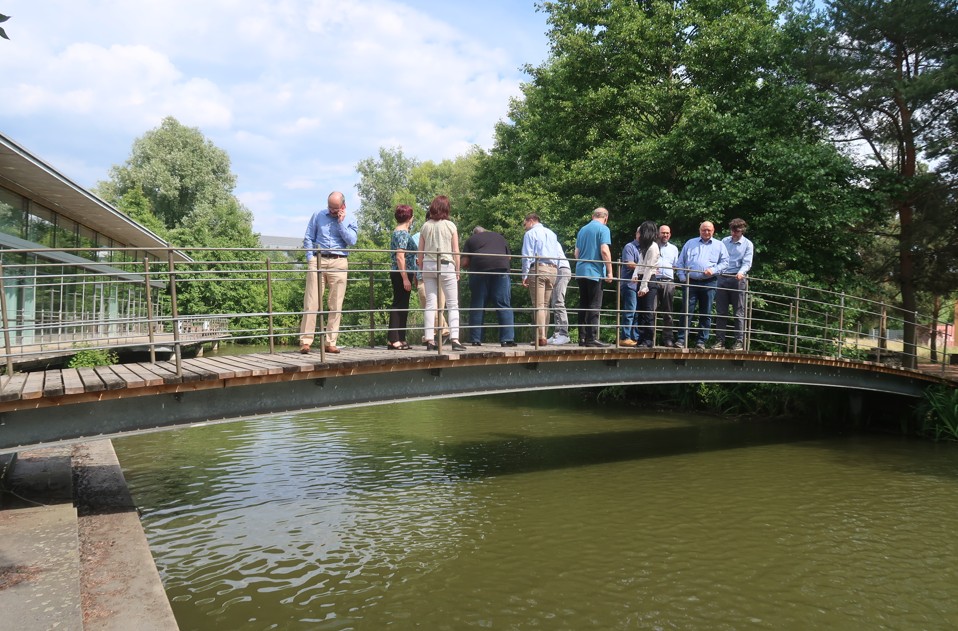
SafeDrop kick-off meeting photo

Today’s diagnostics are often too slow, too expensive and too centralised. SafeDrop follows a different sensing paradigm, inspired by canine olfaction: from the dog’s nose to a multimodal chip.

Manuel Gensler Project Coordinator, Fraunhofer IAP

Two days that set the course

The kick-off brought the whole consortium together to agree on objectives, the work plan and the road ahead. Over two days, partners:

1Reviewed all nine work packages, from requirements and functional coatings to platform integration, AI readout and validation
2Agreed the milestone schedule for the 48 months ahead
3Mapped out the validation pathway for four case studies: water, health, food and air
4Set up the project’s governance, reaching Milestone 1 in the first month
10partners
7countries
48months
4demonstrators
About the project

Why a “digital dog nose”?

Lab analysis is accurate but slow, centralised and expensive. Portable sensors are fast, but often not selective enough for critical decisions. A dog’s nose solves this differently: instead of one perfect receptor, it reads patterns across many overlapping ones. SafeDrop applies the same principle on a chip.

Each SafeDrop K-cell pairs a silicon-photonic Mach–Zehnder interferometer with a thin-film transistor, giving an optical and an electrical signal from the same spot. An array of 32 K-cells, each with a different coating, produces a rich chemical “fingerprint” that AI then decodes.

MZI photonicsEvanescent-field interferometers with thermo-optic multiplexing
TFT electronicsCo-localised transistors that add a second, independent signal
ESJET coatingsOver 20 overlapping organic-semiconductor coatings, precision-printed
Pump-free microfluidicsFBK’s electrowetting droplet handling in a disposable cartridge
AI / MIMO analyticsFuses the optical and electrical channels to recognise what matters in the sample
What we are aiming for (project targets)
>99%classification accuracy
Minuteson-site time to result
≤ €10per cartridge (≤ €5 at scale)
<1 Wsystem power budget

Four real-world demonstrators

Water quality Heavy metals and pathogens at ppb–ppt levels, with under 30 minutes to result
Health / UTI Point-of-care diagnostics for urinary tract infections in minutes
Food safety An apple-juice demonstrator, benchmarked against LC-MS/MS
Air / VOC & drone Exploratory lab validation, moving towards a drone-mounted sensor

Meet the consortium

Research institutes, universities and companies covering the whole value chain, from organic-semiconductor chemistry and silicon photonics to readout electronics, AI and field validation.

Fraunhofer IAP · CoordinatorGermany
ICMPP Petru PoniRomania
Fondazione Bruno KesslerItaly
PHIXNetherlands
Dublin City UniversityIreland
Munster Technological UniversityIreland
FlowphysNorway
Oliveris Tech IncubatorIreland
Lancaster UniversityUnited Kingdom
Spike RenewablesItaly

The road ahead

Jun 2026 · M1Kick-off and project governance establishedDone
Aug 2026 · M3Project website, LinkedIn and X channels go liveDone
Year 1Photonic/electronic co-design, coating materials and first single-cell demonstrations
M9Requirements and KPI framework baselined
M12First single K-cell (MZI–TFT stack) validated
Years 2–4Scale from 4/8-cell submodules to the full 32-cell platform, train the AI, and validate the four demonstrators

Coming up: our first consortium webinar is planned for late 2026. Watch our channels for the date.

Stay connected

Follow SafeDrop for news, results, events and open-ecosystem releases. For press or collaboration enquiries, contact the coordinator through the website.

safedrop-project.eu LinkedIn X · @SafeDropProject
Co-funded by the European Union Co-funded by the European Union

SafeDrop has received funding from the European Union’s Horizon Europe research and innovation programme under Grant Agreement No. 101299090 (HORIZON-CL4-2025-04-DIGITAL-EMERGING-01). Views and opinions expressed are however those of the author(s) only and do not necessarily reflect those of the European Union or the European Health and Digital Executive Agency (HADEA). Neither the European Union nor the granting authority can be held responsible for them.

SafeDrop Newsletter · Issue #1 You are receiving this because you subscribed at safedrop-project.eu · Unsubscribe